
 OTHERS
How Can the Indonesian National Team Win the 2026 FIFA ASEAN Cup?
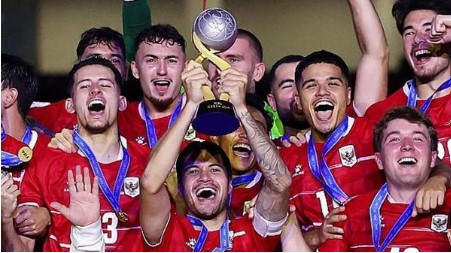
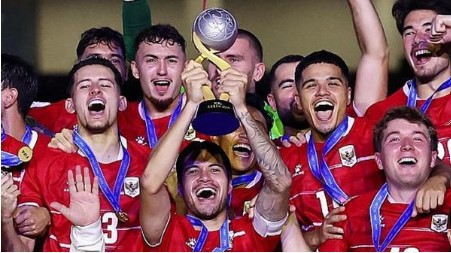
The Indonesian national team was once dubbed the "King of Runners-up" in the ASEAN region because it consistently struggled to emerge as champions. That negative label has finally been shed. Would they be the first at the next stage? Just make sure that you already click and support them to m88 before the match begin.
What did coach John Herdman do to help the Indonesian national team break their mental block in the final?
The "runner-up curse" seemed poised to continue when Indonesia—despite having a numerical advantage and an early 1–0 lead—found themselves trailing 1–2 with only nine minutes of extra time remaining.
It was in this situation that Herdman’s efforts to build the squad's mental resilience became evident. The Indonesian players did not "choke"; they did not lose their composure under intense pressure. Instead, they managed to equalize, forcing the match to a penalty shootout.
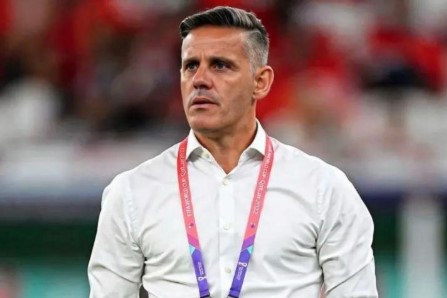
Herdman’s maturity was demonstrated through his in-game management decisions during the final. His ability to read the situation, respond to the match's dynamics, and make the right tactical calls was proven when the three substitutes he introduced—James, Rizky Ridho, and Egy Maulana Vikri—played pivotal roles in Indonesia's victory. James scored Indonesia's opening goal, while Egy and Ridho were instrumental in the build-up to the equalizer scored by Elkan Baggott.
The score remained 2–2 until the final whistle, meaning the champion had to be decided by a penalty shootout. Four Indonesian takers—Kevin Diks, James, Baggott, and Shayne Pattynama—successfully converted their penalties. In contrast, two Thai players failed: Sarach Yooyen hit the goalpost, and Nattapong Sayriya’s shot was saved by goalkeeper Emil Audero.
Which player emerged as the hero for the Indonesian national team?
Indonesian national team defender Elkan Baggott decided to push forward and join the attack with four minutes of extra time remaining against Thailand in the 2026 FIFA ASEAN Cup final on Monday (October 5, 2026) at the Gelora Bung Karno Stadium, Jakarta. Trailing 1-2 against Thailand was a situation that could not be allowed to persist. It was a do-or-die moment for Elkan.
That decision proved inspired when Rizki Ridho delivered a cutback across the face of the goal in the 116th minute. An unmarked Elkan met the ball with a strike that hammered straight into the net.
Elkan’s goal kept Indonesia’s hopes alive, forcing the match into a penalty shootout. In that crucial phase, four Indonesian penalty takers successfully found the back of the Thai net—Elkan being one of them.
Elkan’s national team career has waned since 2024. In May 2024, he failed to answer Shin Tae-yong’s (STY) call-up to represent the U-23 squad in the Paris 2024 Olympic playoff against Guinea. His absence strained his relationship with STY.
Consequently, STY stopped calling Elkan up to the national team. Even after the coaching role changed hands to Patrick Kluivert, Elkan remained uncalled. An abundance of defensive options left him increasingly sidelined.
Why did John Herdman entrust penalty duties to defenders?
Relying on defenders for a penalty shootout seems like an unconventional decision. An Opta Analyst study on major match shootouts reveals that defenders have the lowest success rate.
At the 2026 World Cup, for instance, the data supported this notion. Center-backs had the lowest success rate compared to players in other positions during shootouts; they scored only five goals from 11 attempts, a conversion rate of 45.4 percent. So why did Indonesia national team head coach John Herdman entrust the first four spot-kicks to defenders?
Herdman stated that the four penalty takers had been selected even before the shootout began. They were the players who had been the most clinical during penalty practice the day before the final.
Interestingly, the Canadian coach admitted he had deliberately excluded forwards from the initial list of takers. Attacking players, Herdman noted, did not display as much confidence in the task during practice sessions.
What does the title mean for Indonesia?
After six previous failures in AFF Cup finals, the Indonesian national team finally broke its title drought by winning the FIFA ASEAN Cup at the Gelora Bung Karno Stadium in Jakarta on Monday (October 5, 2026). In the final, the "Garuda" squad defeated Thailand 4–2 on penalties following a 2–2 draw in regulation time.
This success marks a significant milestone, demonstrating that Indonesian football has evolved and is capable of transforming past failures into a source of strength. The six previous final defeats are no longer merely bitter memories; instead, they have become part of the long journey that shaped the team's mentality.
However, it is worth noting that this title should serve as a starting point—not the ultimate goal—for the future of Indonesian football. This success can boost player confidence while acting as momentum to improve youth development, domestic competitions, infrastructure, and the sustainable management of the sport.
How did the final match between Indonesia and Thailand unfold?
Fielding a 3-4-2-1 formation—similar to the one used to dismantle Bangladesh in the previous match—Coach John Herdman made a single change by bringing in Thom Haye to replace Ivar Jenner, who started on the bench. Lee Baker spearheaded the attack, supported by Ole Romeny and Ragnar Oratmangoen. This formation allowed Indonesia's attacks to flow more smoothly.
Dominance in midfield, established right from the start, enabled the team to counter the aggression of Thailand—Southeast Asia's most successful team with seven ASEAN Championship titles. During the opening 15 minutes, Indonesia kept Thailand pinned back in their own defensive third.
Despite dominating play with 68 percent possession, Indonesia failed to score before the first half ended. The hosts registered seven shots, though only two were on target. Meanwhile, Thailand attempted five shots, with just one testing the goalkeeper. The first half concluded with the scoreline at 0-0.
Indonesia continued to struggle to break down Thailand's tight defense. However, the *Garuda* finally broke the deadlock in the 84th minute through a goal by James. The goal came from a free-kick taken just outside the penalty area—an opportunity awarded after defender Nicholas Mickelson committed a foul that earned him a second yellow card.
 All tip stores
 Home
Home
 VIP Packages
 Blog
Blog
 Archives
 Winnings
